
A working guide for local authority teams delivering WHLG, the accountabilities, the two problems that decide every programme, and what to demand from any delivery partner. From Pyramid Eco: retrofit contractors delivering WHLG in Hertfordshire.
Warm Homes: Local Grant, delivered properly
TrustMark registered · PAS 2030 certified, working to PAS 2035 · MCS certified · Delivering retrofit since 2011 · On the IAA remediation framework
The scheme at a glance
| What | Detail |
|---|---|
| Funding | £500 million nationally, across 73 projects covering some 270 local authorities |
| Delivery window | 1 April 2025 to 31 March 2028 |
| Cost caps | £16,600 per home for energy performance measures plus £16,600 for low carbon heating under the July 2026 guidance (widely advertised as “up to £30,000” under the original caps), averaged across the project, not per home |
| Eligible homes | EPC D–G, owner-occupied or privately rented; social housing is funded through separate programmes |
| Eligible residents | Three pathways: an IMD income decile 1–2 postcode (no income verification needed), receipt of specified means-tested benefits, or gross household income under £36,000 |
| Admin allowance | Up to 15% of project spend on administration, explicitly including “searching for eligible homes, signing up households” |
Sources: DESNZ WHLG policy guidance (July 2026); Energy Saving Trust guide for local authorities.
What your authority is accountable for
WHLG money arrives with strings that bind the authority, not the installer. Under the policy guidance, the local authority is responsible for verifying household eligibility through robust checks rather than self-declaration, for compliance with the current quality and installation standards, for managing the cost caps on average by project closure, and for controls that prevent duplicate funding across schemes. When an installation fails an audit three winters from now, the paper trail that matters is yours.
That is the lens for every delivery decision in the programme: can this partner evidence eligibility, quality and cost at the standard your auditors will apply?
The measures WHLG funds, and who is certified to install them
WHLG funds two families of measures, and the July 2026 guidance gives them separate cost caps: energy performance measures at £16,600 per home, and low carbon heating at a further £16,600, both averaged across the project rather than applied home by home. Which measures your project includes is a decision for your authority and your retrofit assessments, not for a contractor.
Energy performance measures. Solid wall, cavity wall, loft and flat roof insulation, and the ventilation that has to go in alongside them. These sit under the PAS framework: assessed under PAS 2035, installed by a PAS 2030 certified installer for those measure types, lodged with TrustMark.
Low carbon heating and renewables. Air source heat pumps, solar PV and battery storage. These sit under a different certification regime: they must be installed by an MCS certified contractor working to the relevant MCS standards, with the installation registered accordingly, and they still fall inside the same PAS 2035 coordinated design for the dwelling as a whole.
That split matters when you choose partners. A contractor certified for fabric measures is not thereby certified for heat pumps or solar, and the reverse is just as true. Programmes that split a home between two contractors also split the accountability for how the measures work together: a heat pump sized before the walls are insulated is the classic version of that problem.
Pyramid Eco holds both. We are PAS 2030 certified and work to PAS 2035 for fabric measures, TrustMark registered, and MCS certified for air source heat pumps, solar PV and battery storage, so a single partner can carry a home from retrofit assessment through insulation, ventilation, heat pump, solar and battery, under one coordinated design and one documentation pack.
Problem one: the resident pipeline
Fuel poverty in England stood at 9.9% of households in 2024 (9.3% in the East of England), yet most WHLG projects find that eligible residents do not arrive by themselves. Eligibility is specific, EPC D–G plus a qualifying postcode, benefit or income, and expressions of interest are not a pipeline: homes must be eligibility-verified, surveyed and consented before a single measure is installed. Authorities that under-recruit hand money back at project closure; authorities that recruit loosely fail compliance checks.
The guidance anticipates exactly this: up to 15% of project spend may go on administration, including searching for eligible homes and signing up households. In Hertfordshire, where Pyramid Eco delivers, the scale is real: Broxbourne received £1,070,786; Watford and Three Rivers were awarded £3.75 million jointly; North Herts, East Herts and others are delivering too, most through the National Energy Foundation and its Better Housing Better Health service. The constraint on every one of those programmes is the same: a verified pipeline of installable homes. Our WHLG postcode checker qualifies residents by scheme area today, and we run doorstep verification behind it.
“Authorities don’t just need installers, they need eligible residents, verified and ready to go. We built our WHLG offer around both halves of that problem.”
Michael Zohouri, Founder, Pyramid Eco
Problem two: the quality you inherit
From the official record: approximately 65,000 households received solid wall insulation under ECO4 and GBIS. The government’s audit found major technical defects in 92% of external wall insulation and 27% of internal wall insulation installations inspected, with a portion posing potential health or safety risks. , Written statement HCWS953, UK Parliament, 13 October 2025
That record is why WHLG polices quality the way it does. Every installation must run through the PAS framework: a retrofit assessment of the whole dwelling, a PAS 2035 retrofit coordinator accountable for the design, PAS 2030-certified installers, and lodgement with TrustMark. For an authority, the practical question is not whether a contractor can hang insulation, it is whether their documentation survives an audit, and what happens on the homes where something is found. A partner who also does remediation professionally, putting right other installers’ failures, has seen where the bodies are buried, and builds so as not to add to them.
What to demand from any delivery partner
Use this as your due-diligence list, on us or on anyone:
- PAS 2030 certification covering the specific measures in your programme, and working arrangements under PAS 2035 coordination.
- MCS certification for any low carbon heating or renewable measures in your programme, heat pumps and solar PV in particular. PAS 2030 certification does not cover them, and the certificates are technology-specific: ask which technologies each contractor is certified for.
- TrustMark registration with a clean lodgement history.
- Independent audit results, not assurances. Ask for the last external audit outcome and rate. Pyramid invites the IAA to inspect 100% of its high-risk installations, at its own cost: read how the programme works.
- Remediation capability, what happens when a survey finds failed existing measures? A partner on the IAA remediation framework can price and fix, not just walk away.
- A resident pipeline method, how they find, verify and sign up eligible households, and whether it maps to the 15% admin allowance compliantly.
- A documentation pack per property, eligibility evidence, retrofit assessment, design, photos, handover, in the shape your compliance team needs.
- Capacity evidence, current volumes, geography and mobilisation time.
- Local track record, named schemes and referees.
How Pyramid Eco delivers WHLG
Resident identification and sign-up
We build and run the resident pipeline for your area: eligibility-checked against all three WHLG pathways, doorstep-verified, and handed over with the evidence your compliance process needs.
Retrofit delivery
Fabric first: solid wall, cavity, loft and flat roof insulation with the ventilation that goes alongside, PAS 2030 certified and working to PAS 2035. Then the low carbon heating half: air source heat pumps, solar PV and battery storage, delivered under our MCS certification. TrustMark registered, and independently audited by the IAA on every high-risk install.
Remediation in-house
Registered on the IAA remediation framework and regularly asked to put right ECO-era installations. When a survey finds failed measures, we price and fix rather than hand the problem back. More on remediation.
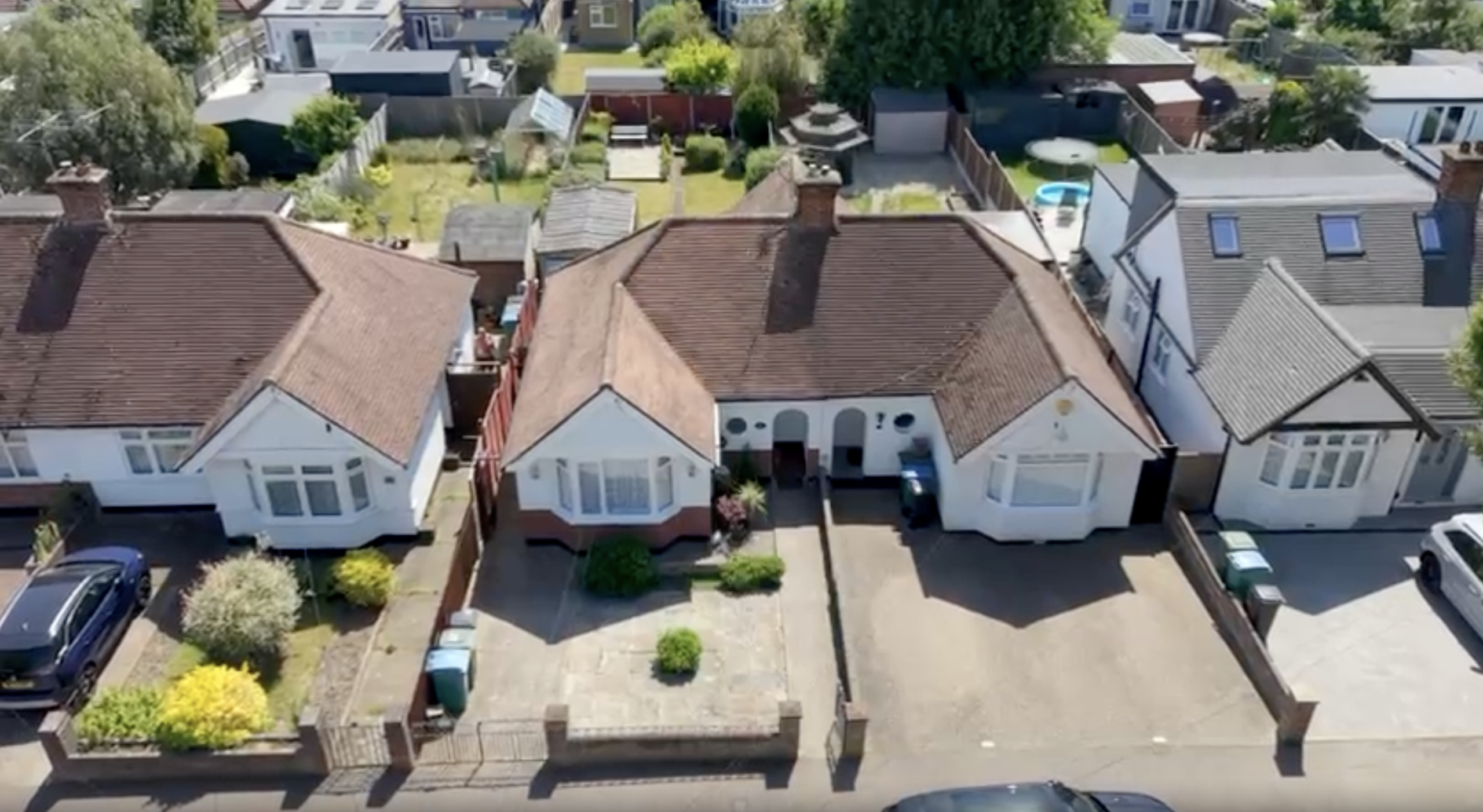
External wall insulation with window replacement, Watford, delivered by Pyramid Eco.
Questions local authority teams ask us
Can you generate resident leads for us compliantly?
Yes, that work sits inside the 15% administration allowance, and every lead is handed over with the eligibility evidence attached, so your verification duty is met with checks rather than declarations.
We already have a managing agent. Where do you fit?
We subcontract to managing agents and scheme operators as readily as we contract directly.
What documentation do we receive per property?
Eligibility evidence, retrofit assessment, coordinated design, in-progress and completion photography, TrustMark lodgement and handover pack, shaped to survive your audit, not just ours.
What happens when a survey finds failed existing insulation?
We are on the IAA remediation framework: we can assess, price and remediate within the same programme rather than returning the home to your list marked “not installable”.
Can you deliver the low carbon heating measures as well as the insulation?
Yes. Insulation and ventilation run under our PAS 2030 certification and PAS 2035 coordination; air source heat pumps, solar and battery run under our MCS certification. One partner, one coordinated design per dwelling, one documentation pack, which also means the heating is sized for the home as it will be after the fabric work rather than as it is now.
Which areas do you cover?
London, Hertfordshire and the South East, with current WHLG delivery concentrated in Hertfordshire.
Further reading
- How do councils choose a Warm Homes: Local Grant delivery partner?
- How do councils fund retrofit outside Warm Homes: Local Grant?
- Can councils use Warm Homes: Local Grant funding to find eligible residents?
- Warm Homes: Local Grant, a guide for local authorities
- Who Pyramid Eco works with
- What does an EPC point actually cost? Our value-for-money calculator
Start the conversation
A 30-minute call will tell you whether we fit your programme: current capacity, your area, your compliance requirements, and what a verified resident pipeline for your patch would look like.
Or call 020 8080 1677
Sources: DESNZ, Warm Homes: Local Grant policy guidance, July 2026 (accountabilities, cost caps, eligibility pathways, 15% admin allowance, delivery window). Energy Saving Trust, WHLG guide for local authorities (£500m / 73 projects / 270 authorities). UK Parliament written statement HCWS953, 13 October 2025 (ECO4/GBIS audit findings). DESNZ sub-regional fuel poverty statistics, 2026 report on 2024 data (9.9% England; 9.3% East of England). Broxbourne Borough Council and Watford Borough Council announcements (Hertfordshire allocations).