
What Is the Great British Insulation Scheme and How Can It Benefit You?
The Great British Insulation Scheme (GBIS) is an initiative launched by the UK government to tackle fuel poverty and achieve the country’s Net Zero targets. The scheme helps fund cavity wall and loft insulation to reduce heat loss, lower energy bills and cut carbon emissions.
If you’re responsible for managing housing stock or looking for ways to boost energy efficiency in your community, GBIS provides a simple, cost-effective solution. In this blog, we’ll cover everything you need to know—from who qualifies and how it works, to the long-term benefits for residents and local authorities.
What Is the Great British Insulation Scheme (GBIS)?
The Great British Insulation Scheme (GBIS) is a government-funded initiative designed to improve energy efficiency in homes across the UK. It provides funding for cavity wall insulation and loft insulation, two of the most effective ways to reduce energy consumption and lower heating bills.
Running until March 2026, GBIS focuses on helping households save money, tackle fuel poverty and contribute to the UK’s Net Zero goals. It’s a unique opportunity for councils, housing associations and sustainability professionals to upgrade housing stock, reduce carbon emissions and improve residents’ quality of life.
Why Is Insulation Important for Homes?
Insulation plays a critical role in keeping homes warm in the winter and cool in the summer. Without adequate insulation, homes lose up to 25% of heat through the roof and more through the walls, leading to higher energy bills and uncomfortable living conditions.
By insulating homes, GBIS addresses key challenges faced by councils and housing providers, including:
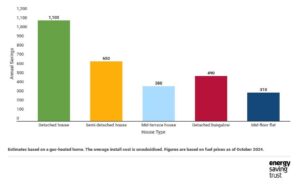
Fuel Poverty: Fuel poverty remains a pressing issue, with an estimated 13% of households in England classified as fuel poor. By improving insulation, households can save up to £310 annually on energy bills, offering a practical solution to reduce costs.
Healthier Living Conditions: Insulation reduces damp, mould and drafts, improving health outcomes. It’s linked to a 20% reduction in asthma cases (all ages) and a 20% drop in COPD cases (65+ years), creating safer, more comfortable homes.
Carbon Emissions: Energy-efficient homes significantly reduce CO2 emissions, contributing to climate goals.
Who Qualifies for the Great British Insulation Scheme?
Great British Insulation Scheme eligibility falls into two main categories: the General Group and the Low-Income Group. Both are designed to ensure that households most in need can benefit from improved energy efficiency.
General Group Eligibility
Households in this group must meet the following criteria:
- Council Tax Bands: A-D in England, or A-E in Scotland and Wales.
- EPC Rating: D-G, indicating homes with lower energy efficiency.
Those in the General Group may need to contribute a small percentage toward the cost of installation. However, the long-term savings make it a worthwhile investment.
Low-Income Group Eligibility
To qualify for free insulation, households must meet stricter criteria:
- Be in receipt of means-tested benefits, such as Universal Credit, Housing Benefit or Pension Credit.
- Reside in a property with an EPC rating of D-G, reflecting poor energy efficiency.
For this group, all costs are typically covered, removing financial barriers and enabling access to essential energy-saving upgrades.
What Types of Insulation Are Available Under GBIS?
The Great British Insulation Scheme (GBIS) focuses on three of the most impactful and cost-effective insulation measures: cavity wall insulation, solid wall insulation and loft insulation. These solutions are designed to significantly improve a home’s energy efficiency, lower heating costs and reduce carbon emissions.
Solid Wall Insulation
How It Works: A layer of insulating material is applied directly to the internal (IWI) or external (EWI) walls of a property. This creates a thermal barrier that significantly reduces heat loss through solid walls.
Best For: Older properties, especially those built before the 1920s, which often have solid walls rather than cavity walls.
Benefits:
Saves up to £550 per year on heating costs for a detached home, depending on property type. External wall insulation can be significantly less disruptive to residents, whilst internal wall insulation is sometimes more suitable for properties in conservation areas or in places with strict planning rules.
Flat Roof Insulation
How It Works: Insulating material is installed either above the waterproof membrane (warm roof) or below it (cold roof) to create a thermal barrier that reduces heat loss through flat roofs. The process depends on the roof’s construction and accessibility.
At Pyramid Eco, we are currently carrying out significant work in this area. In November 2024, we completed 7.5% of all Great British Insulation Scheme (GBIS) work in the UK via our Flat Roof Insulation projects, for example.
Best For: Residential buildings with flat or low-pitched roofs that often experience significant heat loss through the roof.
Benefits: Flat roof insulation can result in significant energy savings and improve the thermal performance of the building. It also helps extend the lifespan of the roof by protecting it from temperature-related stress.
Cavity Wall Insulation
How It Works: Insulating material is injected into the gap (or cavity) between the external and internal walls of a property. This process helps retain heat inside the home while keeping cold air out.
Best For: Properties built between 1920 and 1990, which often have uninsulated or poorly insulated walls.
Benefits: Cavity wall insulation can save households up to £240 per year on energy bills by reducing heat loss. It’s also an excellent way to lower a property’s carbon footprint, cutting emissions by up to 650kg annually.
Loft Insulation
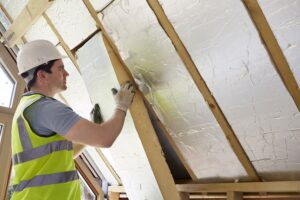
How It Works: A thick layer of insulating material is installed in the roof space, forming a barrier that prevents heat from escaping through the top of the home.
Best For: Homes with uninsulated or under-insulated lofts, where significant heat loss can occur.
Benefits: Loft insulation can reduce energy bills by up to £230 per year, improve indoor comfort, and make homes warmer in winter and cooler in summer. It also helps reduce reliance on heating systems, contributing to lower energy consumption.
Other Types of Insulation
In addition to loft, cavity wall and solid wall insulation, there are other options available depending on your property’s characteristics. These include:
Underfloor Insulation: Installing insulation beneath your floors can help prevent heat loss through the ground.
Draught Proofing: Sealing gaps around windows, doors and other openings can minimise drafts and improve thermal comfort.
Room-in-Roof Insulation: Suitable for properties with converted lofts or attic spaces used as living areas.
External Wall Insulation: Ideal for properties where internal insulation is not feasible or desirable.
When considering which type of insulation to choose, it’s essential to assess your property’s specific needs and consult with professional installers. They can provide expert advice based on a thorough survey and details about your home. These professionals ensure the installation meets quality standards and complies with all relevant regulations.
What Is the Cost of Insulation Through GBIS?
One of the key benefits of the Great British Insulation Scheme (GBIS) is its affordability. It makes energy efficiency improvements accessible to a wide range of households. Depending on eligibility, insulation costs are either fully covered or heavily subsidised.
Low-Income Group
For households in the low-income group, insulation is typically completely free. This includes both the cost of materials and professional installation, ensuring that financial barriers don’t prevent access to energy-saving upgrades.
General Group
Households in the general group may be asked to contribute a small portion of the cost, usually 10-20%, with the exact amount determined during the property survey. Even with this contribution, the savings on energy bills over time make it a highly cost-effective investment.
For Councils and Housing Providers
The cost-sharing model of GBIS allows councils and housing providers to implement large-scale energy-saving measures without straining their budgets. By leveraging this funding, they can make meaningful progress toward reducing fuel poverty, lowering carbon emissions and improving housing stock.
Great British Insulation Scheme: How to Apply
Applying to the Great British Insulation Scheme is designed to be simple and efficient, making it easy for households to take advantage of the initiative.
Step 1: Check Eligibility
The first step is to confirm whether your property qualifies for the scheme. You can use the GBIS eligibility checker to verify if your home meets the criteria based on factors like EPC rating and council tax band.
Step 2: Book a Professional Survey
If your property is eligible, a certified installer will carry out a professional survey. This assessment determines the best type of insulation—cavity wall or loft—and provides an estimate of any costs, if applicable.
It is crucial to choose an ECO Supplier or PAS 2030 accredited installer who specialises in insulation retrofitting. They will guide you through every stage of the process and ensure that all measures are installed properly according to relevant quality standards.
Step 3: Installation
Once the survey is complete and your application is approved, the insulation is installed by accredited professionals. The process is quick and efficient, with most installations finished in just half a day, minimising disruption to residents.
How Does GBIS Compare to Other Schemes Like ECO4?
Both the Great British Insulation Scheme and ECO4 are designed to improve energy efficiency in homes, but they differ in their focus and target audience. GBIS prioritises single insulation measures, such as cavity wall or loft insulation, offering quick and affordable improvements to a broad range of households, including middle-income families.
In contrast, ECO4 is tailored for low-income and fuel-poor households. It takes a whole-house retrofit approach, addressing multiple energy efficiency needs to deliver comprehensive upgrades. This makes ECO4 ideal for homes requiring more extensive improvements.
| Scheme | Focus | Target Audience | Key Benefits |
| GBIS | Single insulation measures | Broader demographic, including middle-income households | Fast implementation, cost-effective impact |
| ECO4 | Whole-house retrofitting | Low-income, fuel-poor households | Comprehensive upgrades for long-term savings |
Related Reading: Whole House Retrofit vs Single Measures: Which is Best for Social Housing?
How Does the Great British Insulation Scheme Work for Local Authorities?
The Great British Insulation Scheme Flex (GBIS Flex) provides local authorities and devolved administrations the ability to expand eligibility criteria and identify households beyond the standard requirements. This flexibility helps:
- Refer households in fuel poverty or with low incomes.
- Support vulnerable individuals, such as the elderly or those with health conditions affected by cold homes.
- Close gaps in eligibility to ensure no household in need is overlooked.
Unlike ECO4 Flex, which focuses on full home retrofits for low-income households, GBIS Flex provides single insulation measures to help more homes. By working together, local authorities and suppliers can ensure that vital energy-saving measures, like insulation, reach the households that need them most.
The Role of Local Authorities in GBIS Flex
Local authorities have a critical role in the success of GBIS Flex. Their responsibilities include:
Publishing a Statement of Intent (SoI)
Local authorities must outline their participation in the scheme by publishing an SoI. This document explains their approach to identifying eligible households.
Identifying and Referring Eligible Households
Authorities assess eligibility based on factors such as fuel poverty, low income or health vulnerabilities. They then provide declarations for each household, ensuring compliance with scheme rules, and collaborate with suppliers to confirm eligibility and facilitate insulation installations.
Collaboration Across Boundaries
Local authorities can refer households within their own jurisdiction or in neighbouring areas where they have delegated authority, helping to maximise the scheme’s impact.
Ensuring Compliance and Governance
To meet Ofgem auditing requirements, authorities must collect and maintain evidence of household eligibility and perform due diligence checks to ensure compliance with scheme regulations.
How Do Energy Suppliers Participate in GBIS Flex?
Suppliers are integral to the delivery of GBIS Flex. Their responsibilities include:
Identifying Eligible Households
Suppliers can use their energy debt data to self-refer households that meet eligibility criteria. For example, households struggling to pay energy bills or at risk of disconnection may qualify for support.
Collaborating with Local Authorities
Suppliers are encouraged to establish strong working relationships with local authorities to streamline household referrals and ensure that projects meet compliance requirements.
Providing Project Data
Suppliers must document all projects delivered under GBIS Flex and share information with Ofgem for monitoring and auditing purposes.
Benefits of GBIS Flex for Councils and Communities
The Great British Insulation Scheme (GBIS) Flex offers councils a unique opportunity to improve energy efficiency, tackle fuel poverty and support climate goals. By tailoring solutions to local needs and working with suppliers, councils can deliver meaningful benefits to residents while meeting sustainability objectives.
Tailored Support for Local Needs
GBIS Flex expands eligibility criteria, allowing councils to support households facing fuel poverty, low income or health challenges that fall outside standard requirements. This ensures no household is left behind.
Streamlined Collaboration
Close partnerships with energy suppliers simplify referrals and speed up the delivery of upgrades like loft or cavity wall insulation, ensuring faster support for those in need.
Advancing Sustainability Goals
By improving energy efficiency and targeting fuel-poor households, GBIS Flex helps councils reduce carbon emissions and contribute to Net Zero targets while lowering energy costs for residents.
Strengthened Governance
Built-in auditing ensures transparency and accountability, giving councils confidence in managing resources effectively and delivering measurable outcomes.
GBIS Flex aligns community needs with sustainability priorities, empowering councils to create warmer, greener and more resilient communities.
Get Started with Pyramid Eco Today
The Great British Insulation Scheme is a great opportunity to improve energy efficiency at scale. With funding available until March 2026, councils and housing providers need to act quickly to:
- Secure funding for eligible properties.
- Meet climate and energy efficiency targets.
- Reduce fuel poverty and enhance tenant satisfaction.
Pyramid Eco is your trusted partner for social housing retrofits across London and the South East. We specialise in transforming housing stock into energy-efficient, comfortable homes through tailored solutions like whole-house retrofits, insulation and renewable energy installations.
Contact Pyramid Eco today to maximise the potential of GBIS and create a greener future for your community.
Frequently Asked Questions (FAQs)
Yes, both homeowners and tenants are eligible for support from the Great British Insulation Scheme. Whether you own your property or rent it privately or through social housing, you can take advantage of this scheme to improve insulation and save on energy costs.
The approval process varies depending on various factors, such as demand and availability of funds. However, once your application has been submitted, you can expect a response within a reasonable timeframe. The scheme aims to assist as many people as possible, so rest assured that they will work diligently to process applications promptly.
To determine your council tax band:
- In England and Wales, visit the gov.uk website.
- In Scotland, visit the Scottish Assessors website.
Once there, enter your postcode or property details to find your council tax band.
Yes, under the Great British Insulation Scheme, eligible homeowners and landlords can apply for a grant to cover partial or full costs of insulation upgrades. The eligibility criteria might include the age of the property, current insulation standards and financial criteria.
To check if you have an EPC and to view its rating:
- In England and Wales, visit the official EPC Register website.
- In Scotland, visit the Scottish EPC Register.
The Great British Insulation Scheme helps tackle climate change by reducing carbon emissions. Insulated homes need less energy to stay warm, cutting CO2 by hundreds of kilograms each year. When scaled up across neighbourhoods, this makes a big difference.
Cavity wall insulation is one of the easiest and most effective ways to make homes energy-efficient. It’s quick to install and causes minimal disruption. The savings are significant, too, reducing energy bills by up to £240 a year and lowering carbon emissions by as much as 650kg annually.
Loft insulation offers benefits that last for decades. It prevents up to 25% of heat loss, which means households can save up to £230 a year on their heating bills. The materials used are durable and don’t require much maintenance, so the investment keeps paying off over time. Insulating the loft also makes homes more comfortable all year round—warmer in winter, cooler in summer—and helps reduce reliance on costly heating or cooling systems.
Improving Energy Performance Certificate (EPC) ratings is key to making homes more energy-efficient and meeting regulations. Adding insulation is one of the easiest ways to do this. For example, cavity wall insulation can boost a home’s rating by one to two bands, while loft insulation makes a big difference in overall thermal performance. Better EPC ratings mean homes are cheaper to heat, more environmentally friendly, and more attractive to tenants or buyers.
Insulation helps to control moisture, preventing damp and mould, which can cause health problems like asthma. To maintain airflow, homes should have features like trickle vents or extractor fans, so you get fresh air without losing heat.


