
External wall insulation keeps more heat inside your home, reduces your bills, and boosts your EPC rating. It’s one of the most effective ways to make a property warmer and more efficient.
But how much does external wall insulation cost?
For most UK properties, the cost is between £6,000 and £30,000, depending on size, materials, and finish. With grants and 0% VAT, many homeowners pay far less. Keep reading to see how the numbers break down and what you could save.
What Is External Wall Insulation?
External wall insulation (EWI) involves fixing an insulating layer to the outside of your home and covering it with a protective finish like render or cladding. It’s most commonly used for solid-wall homes built before the 1920s, where cavity wall insulation isn’t an option.
Solid brick or stone walls can lose up to 45% of a property’s heat. Wrapping the outside in insulation acts like a thermal jacket, stopping heat loss without touching the interior.
Typical installation process for EWI
- Preparation: Assess the walls, remove obstructions like pipes and fittings, and repair any defects.
- Fix insulation boards: Boards are attached using a combination of adhesive and mechanical fixings. Material choice affects performance, lifespan, and cost.
- Reinforcement: A mesh layer is embedded in a basecoat to add strength and prevent cracking.
- Finishing: Render or cladding is applied to protect against the weather and give the home its final appearance.
External Wall Insulation Cost in 2025 (Full Breakdown)
The cost of external wall insulation depends on your property’s size, shape, and complexity, as well as the materials and finish you choose.
EWI Cost by Property Type
The table below shows typical EWI price ranges for different home types:
| Property Type | Low Range | High Range | Average |
|---|---|---|---|
| Mid-floor flat | £5,000 | £7,000 | £6,000 |
| Mid-terrace | £6,000 | £10,000 | £8,000 |
| Semi-detached | £14,000 | £20,000 | £17,000 |
| Detached house | £20,000 | £30,000 | £25,000 |
| Detached bungalow | £15,000 | £21,000 | £18,000 |
These figures include materials, labour, and standard render finish, but not extras like guttering or ventilation upgrades.
Related: Internal Wall Insulation: A Guide to Energy-Efficient Living
EWI Cost per m² (Material + Installation)
Material choice has a big impact on total project cost, performance, and suitability for your home.
EPS boards: £145–£195/m² — most cost-effective, good thermal performance, low weight.
Mineral wool: £155–£205/m² — fire-resistant, breathable, great for older homes.
PIR boards: £150–£200/m² — High insulation value per thickness, good for tight spaces.
Phenolic foam: £150–£200/m² — Very thin yet high-performance, but more expensive.
Woodfibre/cork: £180–£220/m² — Breathable, eco-friendly, ideal for heritage buildings.
While expanded polystyrene (EPS) is the cheapest option, Pyramid Eco does not use EPS due to its lower fire performance and sustainability concerns. We focus on safer, higher-spec materials that deliver long-term value and meet PAS 2035 standards.
Related: Why Pyramid Eco Is Saying Goodbye to EPS Insulation
Factors That Affect External Wall Insulation Cost
Your total price will depend on several key factors, and understanding each will help you budget more accurately and avoid surprises:
Property Size and Shape
The larger the external wall area, the higher the overall cost. Simple, box-shaped homes are quicker and cheaper to insulate than properties with multiple extensions, bay windows, or intricate architectural details.
Insulation Material
Material choice can significantly impact price and performance. EPS is the cheapest option but has drawbacks in safety and sustainability, which is why Pyramid Eco does not use it. Higher-quality options like mineral wool, cork, PIR, or phenolic foam cost more but offer better fire safety, breathability, and thermal performance.
Finish Choice
Your chosen finish affects both the look and long-term durability. Standard render is the most affordable. Acrylic or silicone renders cost more but last longer and resist cracking. Brick slips or decorative cladding give a premium appearance but increase installation costs.
Accessibility
Homes with difficult-to-reach walls, conservatories, narrow access points, or large roof overhangs often require extra scaffolding, equipment, and labour, adding to the total cost.
Hidden EWI Costs to Watch For
Beyond the basic install price, there are extra costs many homeowners don’t account for:
Scaffolding
Most EWI jobs require scaffolding, starting at around £625 per week for single-height access, with higher costs for multi-storey or complex rooflines.
Gutter Removal and Replacement
Old gutters and downpipes may need to be removed or upgraded, which can cost over £1,000 for a typical 15–20 metre run.
Pipework Relocation
Boiler flues, soil stacks, and waste pipes sometimes need to be moved, adding to labour and material costs.
Ventilation Upgrades
Sealed walls may require new ventilation, such as trickle vents or extractors, to prevent condensation.
Waste Disposal
Skip hire for debris and packaging usually ranges from £125 to £320 per week, depending on size and location.
At Pyramid Eco, we include all of these potential extras in your quote from the start, so you know exactly what to expect and won’t face any surprises.
How Much Can You Save with External Wall Insulation?
External wall insulation is one of the few home upgrades that delivers benefits every single day. It lowers energy bills, provides greater comfort, and increases the value of a property.
According to the Energy Saving Trust, adding EWI can reduce heating costs by £160 to over £550 per year, depending on your property type, wall area, and current energy efficiency.
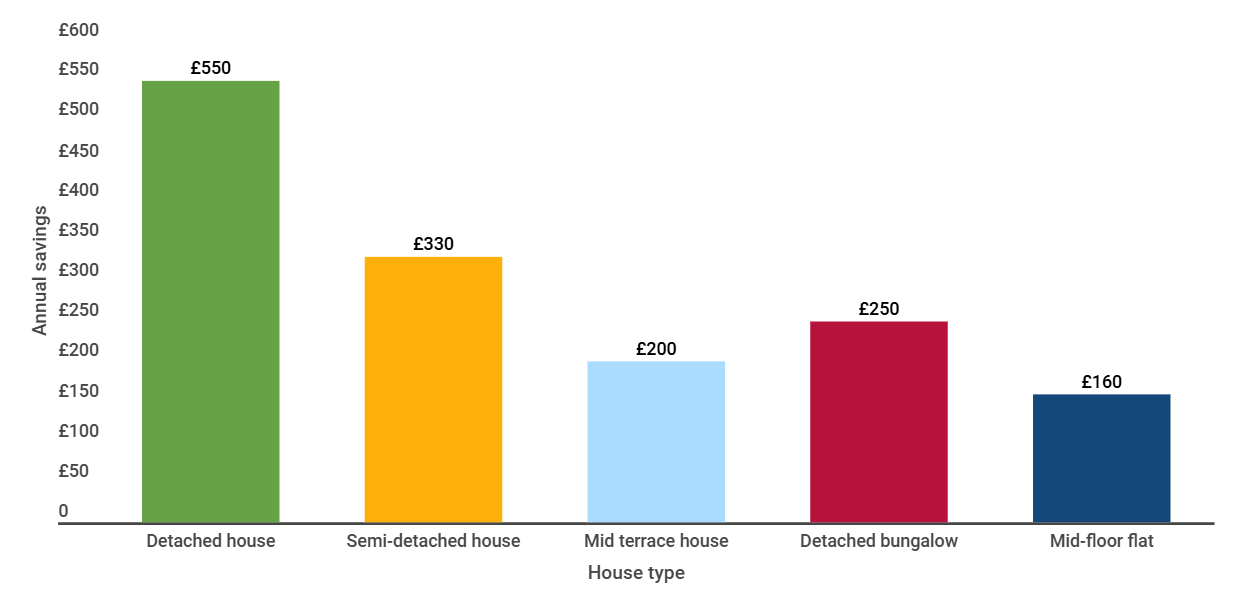
Source: Energy Saving Trust
The environmental benefits are just as significant. A typical installation can cut up to 1,500 kg of CO₂ emissions per year, helping the UK meet its 2050 net-zero targets while also preparing your home for tightening energy regulations.
There is also a property value boost to consider. Improving your EPC rating with EWI can increase your home’s market value by 5–14%, with the biggest gains in areas where buyers actively look for energy-efficient features.
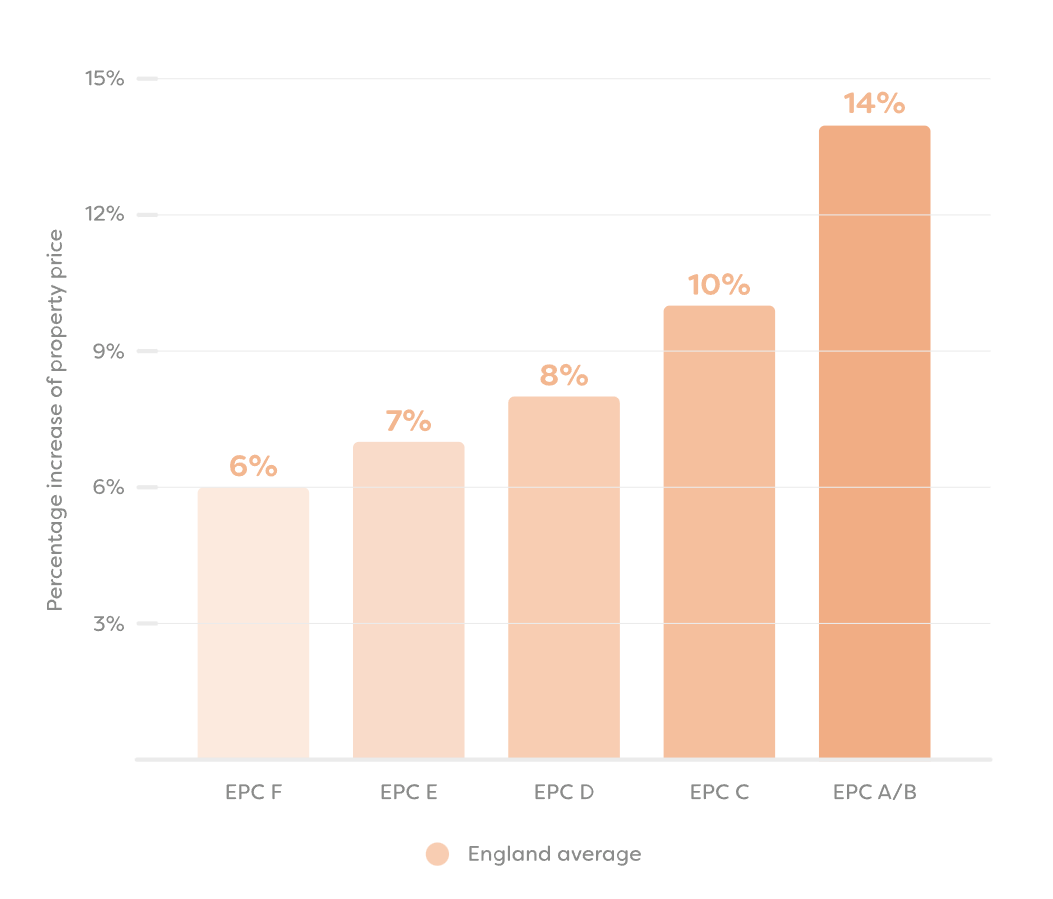
Source: Money Supermarket
Given that external wall insulation typically lasts for 30 years or more, this means you could enjoy decades of lower bills and increased property value, making it one of the most financially rewarding home improvements available.
Grants and Funding for External Wall Insulation
Upgrading to external wall insulation can cost far less with the right support. Government schemes, local authority funding and cashback from certain mortgage lenders can cover much of the cost, and in some cases all of it.
Government and Council Schemes
ECO4 Scheme: Based on income, benefits, and EPC rating, ECO4 can fund up to 100% of EWI costs for low-income or vulnerable households.
Great British Insulation Scheme: For homes with EPC ratings D to G, offering partial or full funding.
Local Authority Flex (LA Flex): Some councils set their own rules, so you could qualify locally even if you do not meet national criteria.
Zero % VAT Until March 2027: All qualifying EWI projects are VAT-free on materials and labour until 2027, instantly saving 20%.
Green Home Cashback from Major UK Banks
High street banks pay cashback for green upgrades, including insulation:
Lloyds Bank: £500 for insulation, up to £2,000 for other measures
Halifax: £500 for insulation, £2,000 for heat pumps
Barclays: £500 for insulation, £2,000 for low carbon heating
Virgin Money: £250 for insulation with a £2,500 minimum spend.
Pyramid Eco is an accredited installer recognised by major funding providers and banks. We help you access grants, local schemes, zero % VAT and cashback, guiding you from eligibility checks to claim submission so you can pay much less or nothing at all for EWI.
Find out what support you can access by visiting our funding options page.
How to Choose the Right EWI Installer
The installer you choose will determine the quality, durability, and efficiency of your EWI upgrade. A poor job can lead to damp, reduced performance, and wasted money. Here is what to look for.
PAS 2035 Compliance
This is required for most grants and ensures the work meets strict quality standards tailored to your property.
SWIGA or MCS Certification
These accreditations show the installer meets recognised industry standards and can offer warranties of up to 25 years.
Proven Track Record
Ask for case studies, photos, and references to confirm their experience and results.
Transparent Quotes
To avoid surprises, look for clear, itemised quotes that include all materials, labour, scaffolding, and any extras.
Pyramid Eco meets all these standards and more. We start with a grant eligibility check so you know what funding you can access. We are fully accredited, have a strong track record, and provide clear quotes while managing the process from start to finish with minimal disruption.
See Our Work in Action: Cambridgeshire EWI Case Study

Want to know how a high-quality, PAS-compliant external wall insulation project is delivered?
Read how Pyramid Eco helped a Cambridge homeowner cut heating bills, improve comfort, and increase property value
while securing funding to lower upfront costs.
Save on External Wall Insulation with Pyramid Eco
Pyramid Eco makes external wall insulation simple, reliable, and affordable. As a leading external wall insulation company, we start with a free home survey to assess your property, identify the best insulation options, and handle grant or funding applications on your behalf.
Our certified team installs high-quality insulation to the highest standards and backs it with a long-term warranty — giving you a warmer, more energy-efficient home with less stress and lower costs.
Book your free consultation today and see how much you could save with Pyramid Eco.
FAQs
Is external wall insulation worth it?
Yes. External wall insulation can cut heating bills by £160 to £550+ per year, improve comfort, boost your EPC rating, and increase property value by 5–14%. With grants and cashback, the payback period can be as little as 5–6 years for many homes.
How long does external wall insulation last?
When installed by a certified installer and maintained properly, external wall insulation can last 30-40 years. Many systems come with a 25-year SWIGA-backed warranty for peace of mind.
Do I need planning permission for external wall insulation?
In most cases, no planning permission is required. However, if your property is listed in a conservation area or you are changing the exterior appearance significantly, you should check with your local council before starting work.
How long does installation take?
For most properties, installation takes two to three weeks, depending on size, complexity, and weather conditions. Work is carried out externally, so disruption inside your home is minimal.
What is the difference between external and internal wall insulation?
External wall insulation is applied to the outside of your property, keeping your internal space intact and improving weatherproofing. Internal wall insulation is fitted inside and can reduce room size, but may be suitable if external changes are not possible.


